The Productypes

The email arrives from Ant Wilson, CTO at Supabase. Subject line: project inactivity. Your database will be paused if you don’t use it within seven days. It’s a form letter, automated, impersonal. It is also, accidentally, the best product testing program I never designed. Every week the clock resets. Use the app or lose the backend. So you use it. You find bugs. You fix them. Repeat.
Two apps have been living under this regime for months now.
The itch
Some problems announce themselves. Others accumulate quietly until you notice the pattern.
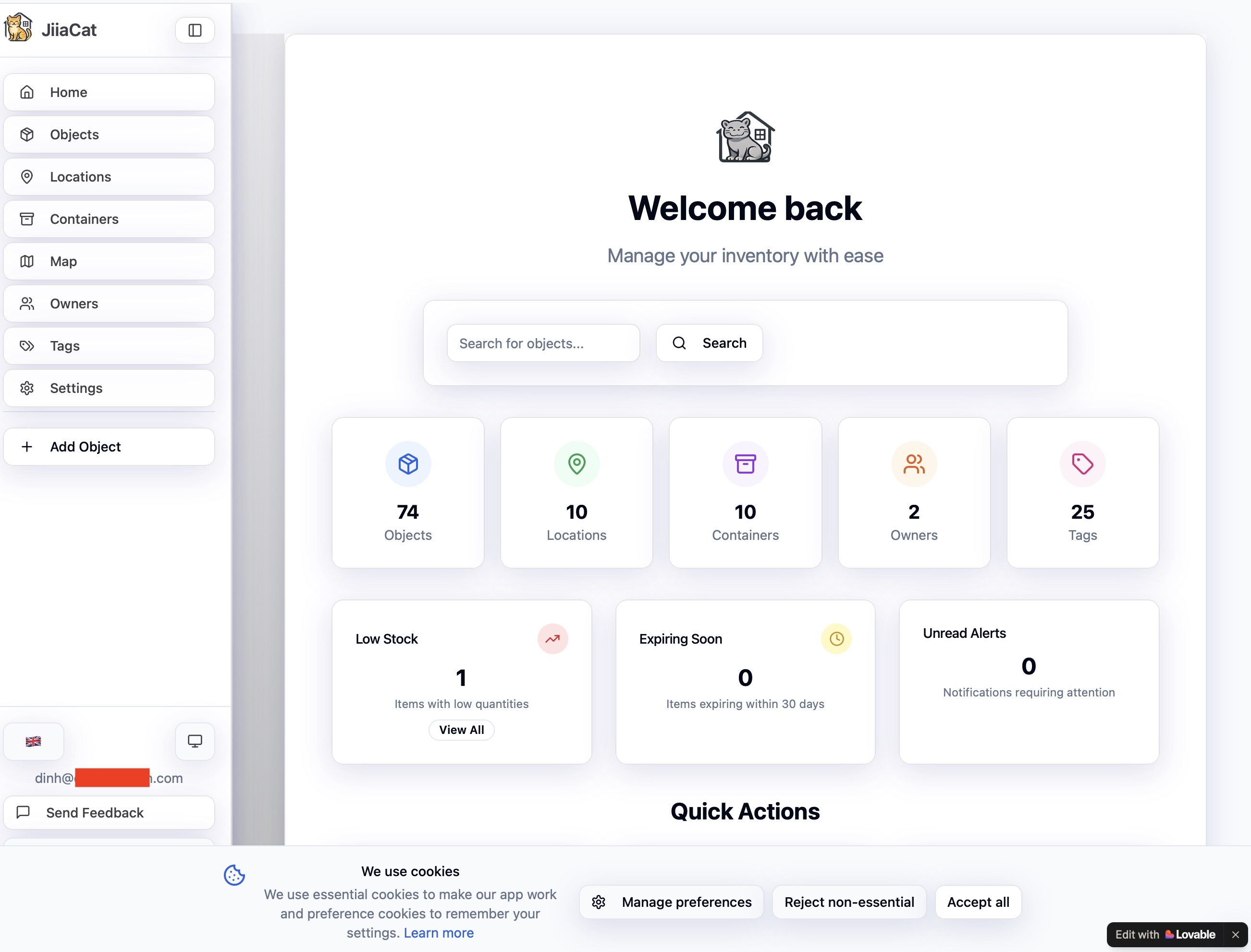
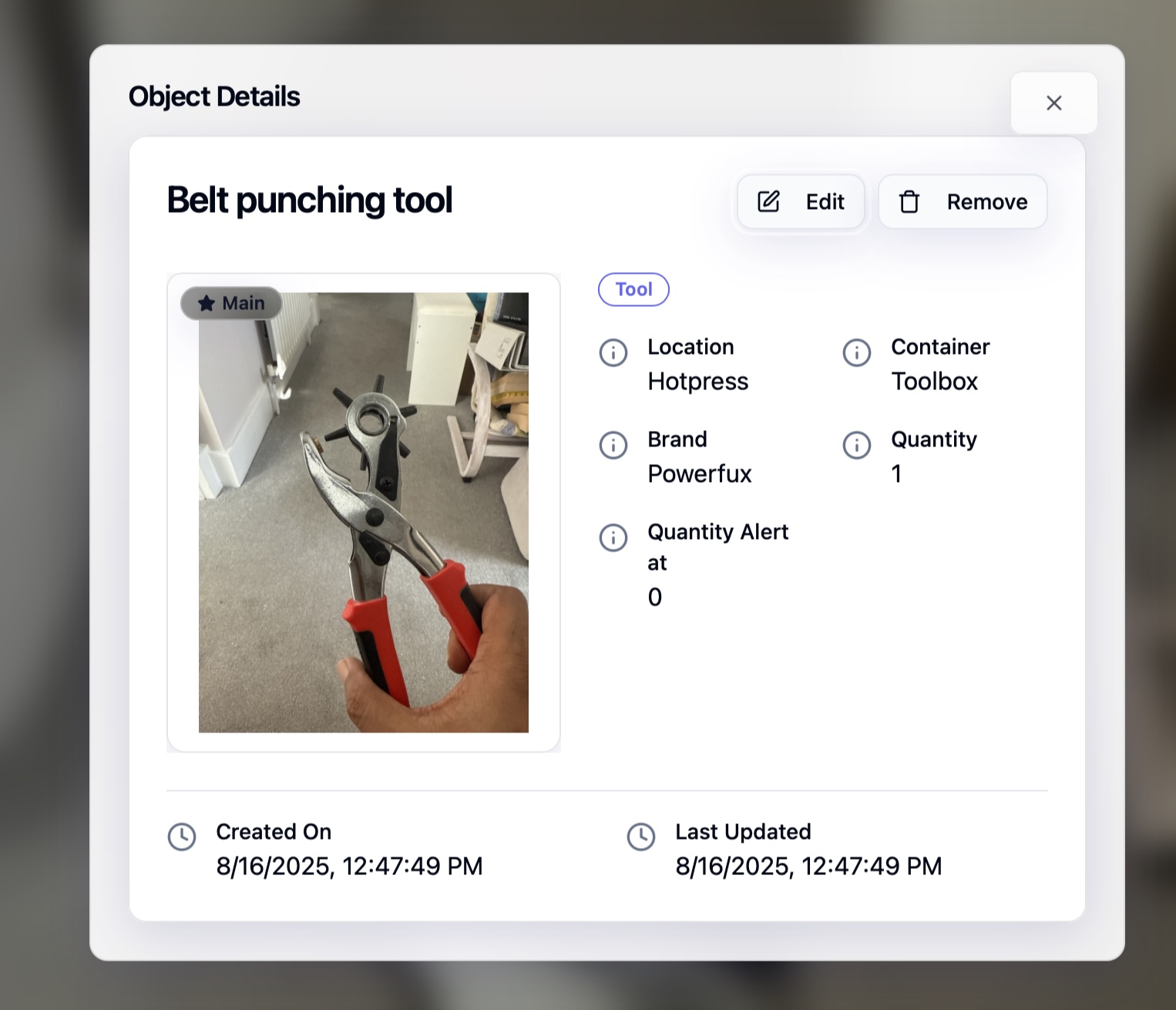
I needed the jigsaw three months after buying it. Where did I put it? Somewhere in the house. A closet, a shelf, under the desk. The kind of tool you use once and then forget where it lives. Same story with the belt punching tool, the spirit level, the soldering iron. I own maybe two hundred objects worth tracking and I couldn’t tell you where half of them are. The usual solution is a spreadsheet, but spreadsheets don’t have photos, don’t show you a map of your house, don’t let you nest containers inside containers. JiiaCat started as that: a home inventory app because nothing else fit the shape of the problem.
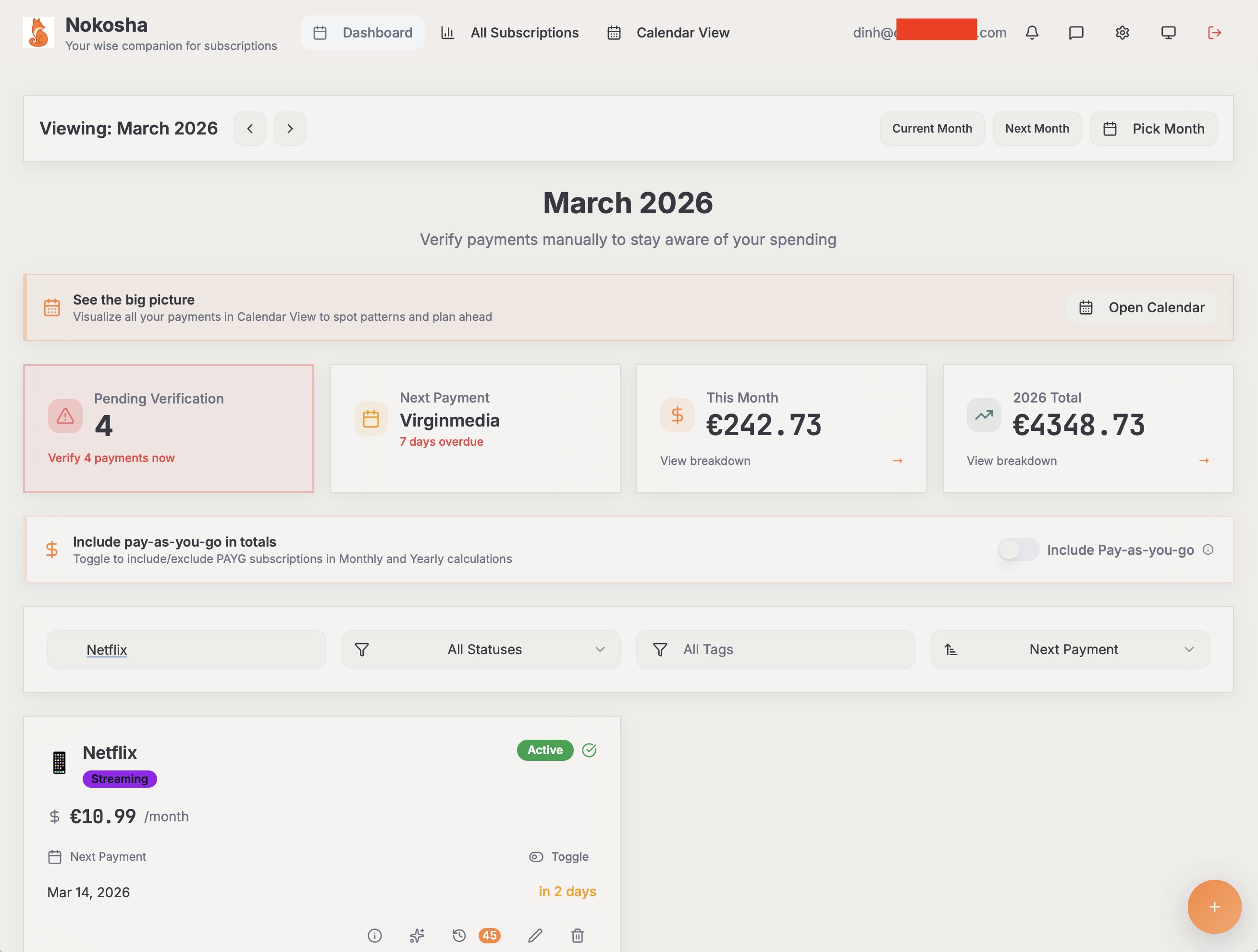
Nokosha came from a different friction. How many subscriptions am I paying for? The answer is always more than you think. Streaming services, cloud storage, domain renewals, software licenses. They bill on different cycles, in different currencies, and the total creeps up in ways that a bank statement doesn’t make obvious. A subscription tracker. Not a budgeting app, not a financial dashboard. Just: what am I paying, how much, when does it renew.
Neither of these is a startup idea. Neither has a pitch deck or a target market. They are tools built for an audience of one, born from the kind of personal friction that used to get solved by adapting your habits to whatever already existed.
What I got
I built both apps in Lovable. The GitHub integration made it feel like a real workflow: every session saved its changes in a branch, and I could switch to VS Code, push updates, and come back without friction. When credits ran out, the code was already in Git — Copilot picked up without a stumble.
JiiaCat came together over a weekend and then kept growing. The first Lovable session produced an inventory grid with photo uploads, the basics for adding and editing items, and a clean interface. Ten months and 675 commits later, it has a map view showing where items live in your home, a container hierarchy (the toolbox is in the closet, the closet is in the bedroom), password-free sign-in using your device, and rules that make sure people only see their own data.
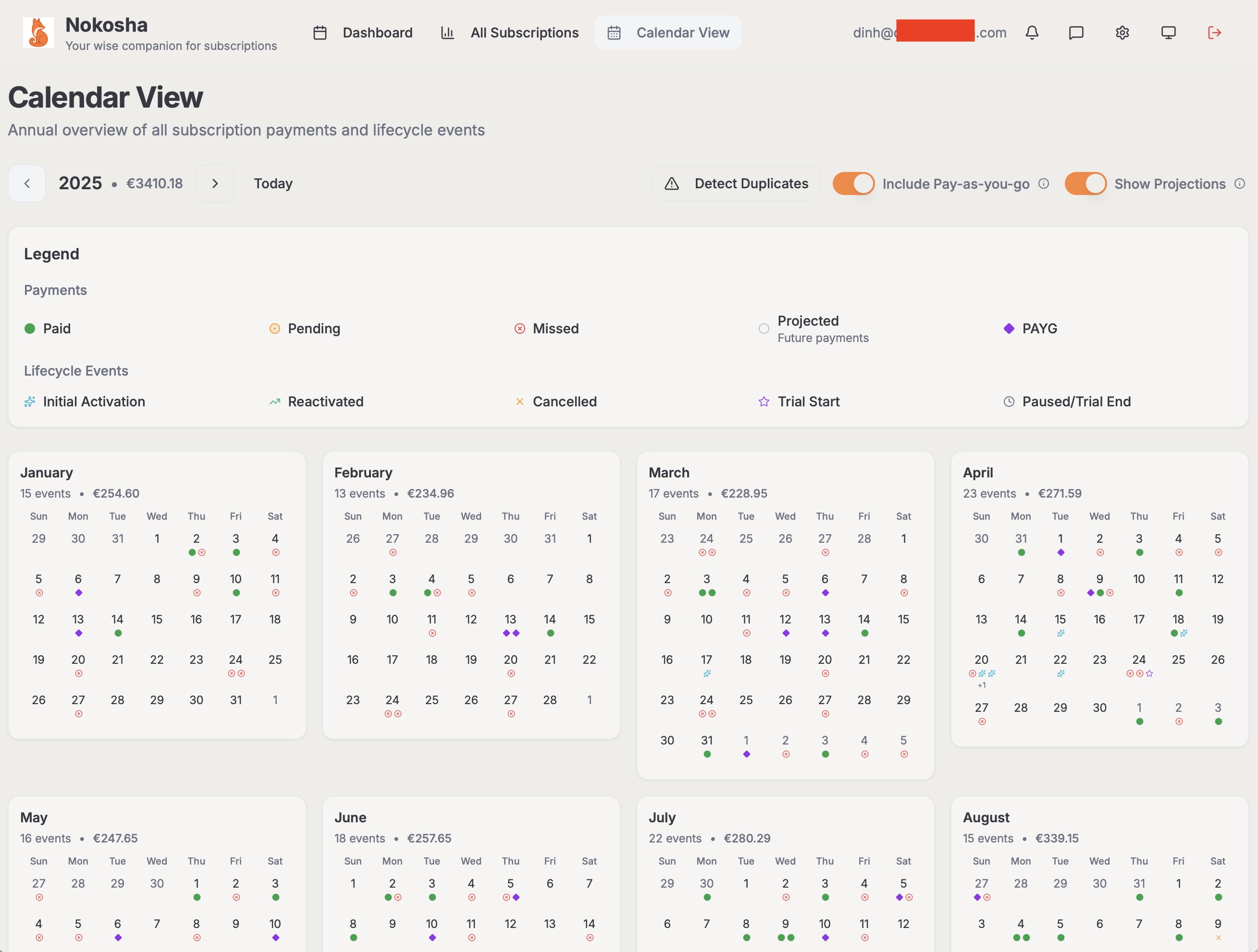
Nokosha followed a similar arc. The first usable version was a subscription list with costs and renewal dates. Seven months and 292 commits later, it tracks payments across multiple currencies, uses exchange rates so those costs can be compared fairly, stores payment history, encrypts sensitive financial data, and signs you in through a link sent by email. No passwords to remember, no passwords to leak.
Both apps run on Supabase for the database, sign-in, and file storage, with React handling the app itself. Both started as single-session prototypes — and then kept demanding attention.
After the first weekend
The standard vibe coding story ends after the first weekend. Built a thing, it works, here’s what surprised me. These two apps broke that pattern by refusing to be finished.
The Supabase inactivity timer forced the issue. Every seven days: open the app, use it for real, notice what’s broken. Not a testing routine I planned. Just infrastructure policy accidentally creating one. A renewal calculation off by one day at month boundaries. A photo upload that worked on desktop but failed on mobile Safari. Container nesting that broke at three levels deep. Each bug was a commit. Each commit was a question about what the app should actually be. At some point I was writing tests, then Architecture Decision Records. The kind of documentation you write when you plan to maintain something. I hadn’t planned that either.
Nokosha’s Supabase instance moved to its own server when I wanted more control over backups and how long data was kept. The rules about who could see what got tighter after I imagined (however unlikely) someone else using the app. Encryption for financial data. Monthly testing loops where I’d sit with the app for an hour and just use it, noting everything that felt wrong.
Friends tested both apps. Not formal beta testing. Just: “here, try this, tell me what’s annoying.” The feedback was specific and useful in ways that my own testing missed. I was too close to the navigation to notice that a first-time user couldn’t find the settings page.
What surprised me
A friend looked at both apps and said something I didn’t expect. “Nokosha might be overfitted to your use case. A home inventory app would have wider appeal.”
She was right. Nokosha’s multi-currency support, its specific renewal cycle logic, its payment history tracking: all shaped precisely around my financial situation. Useful to me, awkward for anyone else. JiiaCat’s problem, on the other hand, is universal. Everyone owns things. Everyone loses track of where those things are. The container hierarchy, the map view, the photo-first interface: these solve a general problem, not a personal one.
That observation shifted something. I’d built both apps for myself, with no thought of anyone else using them. The idea that one of them might have an audience felt like discovering a door in a wall you thought was solid.
The lesson
Neither of these apps is a prototype. A prototype proves a concept and gets thrown away. Neither is a product. A product has users, support, a business model. They sit in a space that didn’t have a name until I needed one.
A productype. The territory between “I built this in a weekend” and “people pay for this.” Software that works, that you maintain, that does its job for a small audience, that could become a product but hasn’t yet. Not because it isn’t ready. Because you haven’t decided.
Vibe coding didn’t just make building fast. It made sustaining cheap. My day job requires teams, sprints, roadmaps, compliance reviews. These apps serve one person and run on Supabase’s free plan or a small rented server. The AI tools cost money: a subscription bundle and monthly credits add up. But the cost that used to kill personal projects was developer time, and that dropped by an order of magnitude. A solo developer can maintain two real applications, with tests, encryption, and proper access control, for ten months without it becoming a second job.
JiiaCat and Nokosha are slow burns. No launch day, no Product Hunt post, no “shipped in a weekend” tweet. Just two apps that keep being shaped by use.